Why are new trade hubs forming now?
For decades, China dominated global manufacturing and export. But the country’s economic success has made its goods and services more expensive, while demographic shifts are reshaping its workforce. At the same time, developing markets in the Global South are gaining purchasing power, and manufacturers seeking lower production costs have been looking beyond China. Companies across the globe have also diversified their supply chains to ensure better risk management among challenging geopolitics.
The pace of change accelerated dramatically in 2025, driven by the tariffs introduced by the US government in early April. Around one-third of companies have found new markets for exports and supply since the US began to impose its new tariff strategy, and nearly two-thirds are planning a similar move, according to the 2025 Allianz Trade Global Survey. But the transformation we’re seeing today runs much deeper than any single policy shift.
New trade hubs are establishing themselves across the planet, and the currents of global trade are changing direction. This has its risks, but it also offers opportunities for those who can adapt fast enough.
Three new trade hubs lead the way
Not all new trade hubs are created equally. The top three emerging hubs – Vietnam, Malaysia, and the UAE - each have particular strengths and geographic advantages, and knowing them is key to safely conducting business across borders.
With three medium-to-large ports, Vietnam focuses on manufacturing goods and shipping them to markets worldwide. The country’s ports may be smaller than the UAE’s and Malaysia’s, but they’re strategically positioned to serve the competitive manufacturing capacity that Vietnam has built. The country offers low labor costs compared to its regional competitors, and has used this to occupy some of the low-cost manufacturing market share recently vacated by China. And, with one of the world’s 20 largest populations, it has the manpower to build serious manufacturing strength.
Leaning on its market-oriented economic model, trade agreements and solid workforce growth, Vietnam is expected to be one of the fastest growing economies in Asia Pacific – our research projects its economic growth at 6.1% in 2026. And its manufacturing capacity could drive even sharper growth in the near future. Over the coming decade, Vietnamese exporters have the potential to move up the manufacturing value chain from textiles and consumer electronics toward semiconductors and cars, following the path blazed by Japan, South Korea and China.
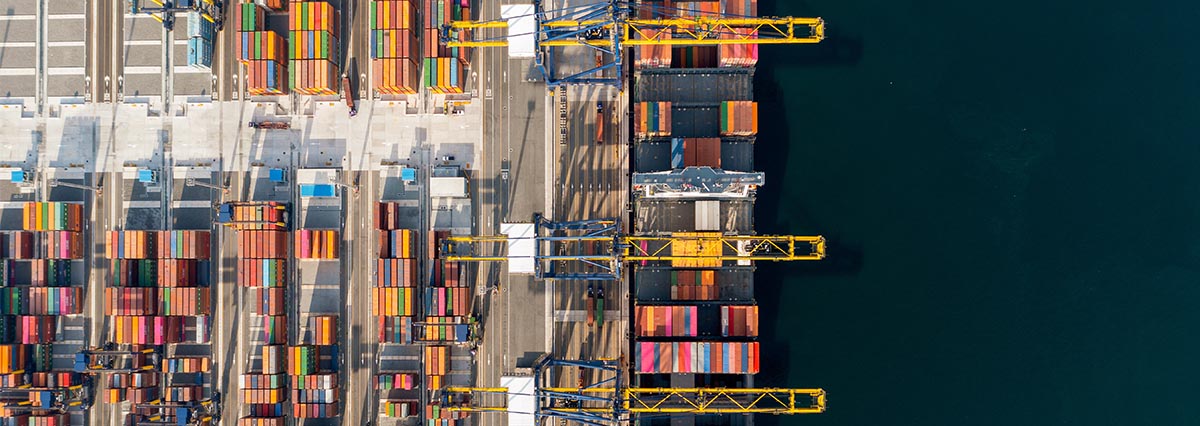
Malaysia, meanwhile, combines a strategic location with a multimodal approach. The country manufactures and exports its own products, but Kuala Lumpur's advanced Port Klang, along with other Malaysian ports, also makes it a re-export hub for Southeast Asia. Like the UAE, Malaysia boasts world-class port infrastructure, with Port Klang (alongside the UAE’s Jebel Ali port) ranking among the top 10 global ports by tonnage, behind only China, South Korea and Singapore.
Before the conflict with Iran, the UAE was emerging as a tri-continental logistics hub thanks to its strategic location, enabling new south-to-south and east-to-west connections. The current situation is obviously impacting global trade, but in the longer term, the UAE can leverage Dubai’s Jebel Ali port. Among the most advanced in the world, this port features sophisticated maritime logistics and smart port technology, and is capable of handling ultra-large container vessels. While the conflict with Iran could significantly impact the role of Dubai in global logistics in the short term, its strategic location will continue to make the Jebel Ali port a key part of the emerging supply chains. As an example of activities here, companies in the UAE import goods such as commodity products from Kenya and metals from South Africa, re-exporting them to be refined in Asia. The country is also investing in its own manufacturing footprint, but its relatively low manpower will continue to position it more as a logistics hub.
Opportunities and risks in a fragmented global system
The rise of these new hubs is changing the balance of global trade. On the upside, the increased availability of low-cost manufacturing offers reduced concentration risk and greater supply chain flexibility. Where companies once relied heavily on a single source (typically China), they now have more options. Companies can now work with suppliers located closer to their target markets for products on short turnarounds, while relying on more distant suppliers for goods on longer delivery timelines.
However, with every opportunity comes new risks. Politics, rather than pure economics, is increasingly a factor in trade outcomes, creating unpredictability. Where companies diversifying their supply chain previously only had to understand the Chinese political context, they now have to monitor cultural and political shifts in multiple countries.
This higher complexity increases the friction and costs of trading. As global demand patterns shift, traffic is moving to routes that were previously little-used, bringing new vulnerabilities. Choke points, where port infrastructure has not kept up with demand, are increasingly visible, and some will require substantial investment to reach their full potential. Another issue is overland routes gaining momentum, which puts added pressure on supply chains.
What this means for business
Change will remain a constant as hubs like Vietnam continue to invest in their manufacturing capabilities, developing the skills and infrastructure to develop their economies further. Vietnam’s current strengths and future potential were among the reasons why we opened an office there in 2025, to support local exporters and our global customers that want to capitalize on this shift.
Success in this context requires both supply chain flexibility and deep market expertise. This means seeking local-level support combined with the global insights needed to understand rapidly shifting economies. Allianz Trade’s presence in these emerging hubs provides on-the-ground insights into evolving market dynamics and tailored support, enabling companies to make informed decisions and trade with confidence.